
Nepalese Himalayan Women Turn Sunlight into Empowerment
Contact persons


Share article:
Can solar energy technology empower women and boost local food systems in the Nepalese Himalaya region? At this International Women’s Day, we highlight the daily work, ownership and leadership of women in an agricultural cooperative in Pokhara.
By Dolendra Paudel and Roshee Lamichhane
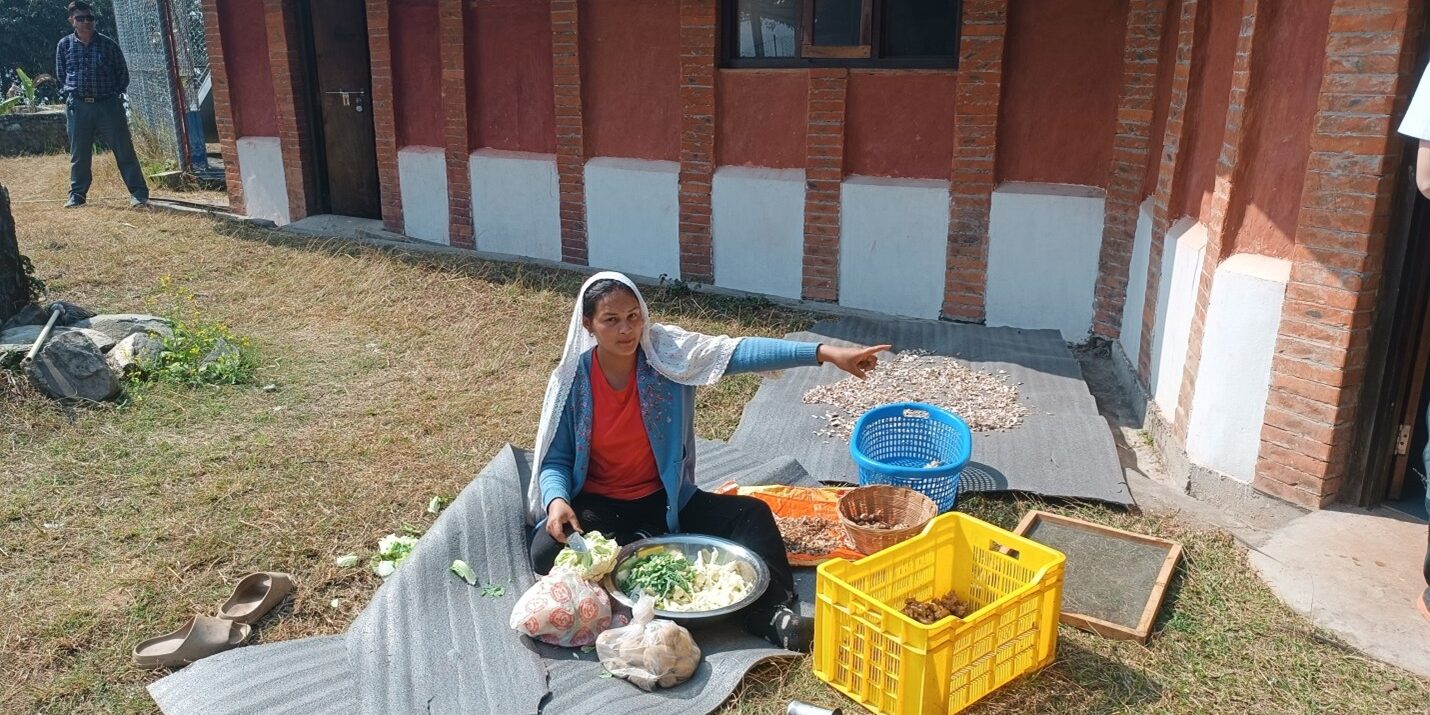
In February, Solar Food researchers visited a women-led agricultural cooperative in Pokhara, Nepal as part of our ongoing research on solar drying, gender and labor analysis, and alternative finance. The visit to the cooperative was an important step in mapping potential case studies where an improved solar drying technology will be tested. We met with a women-led agricultural cooperative who actively engages in collective action, entrepreneurship, and local food innovation.
Bageshwori Women Agricultural Cooperative, also known locally as the Tiger Temple Cooperative, was established in 2022. Located in Ward 18 of Pokhara Metropolitan City, the cooperative is fully led and managed by women. All 16 members are women, and every leadership position, from executive committee roles to management, is held by them.
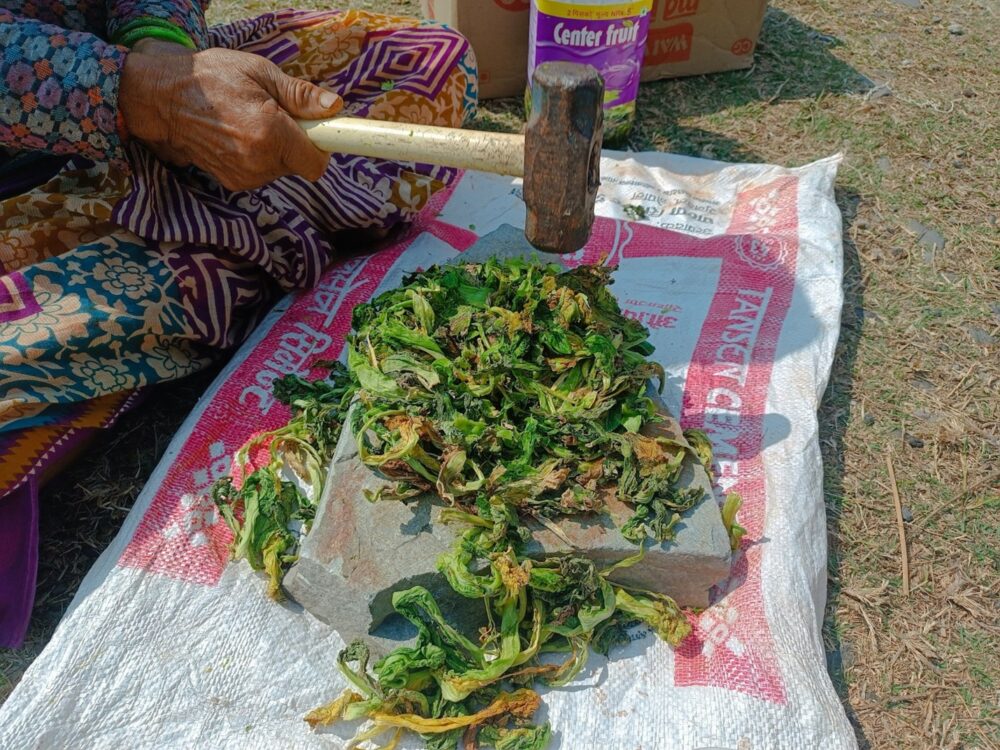
Photo: Dolendra Paudel
Governance appears strong and participatory. Members meet monthly, women actively speak in meetings, financial decisions are transparent, and trust in leadership is high. For a relatively young cooperative, this level of institutional maturity is notable.
The cooperative aggregates and processes crops produced by smallholder farmers in the area. Key products include ginger, turmeric, radish, spinach, and coffee. Rather than selling everything fresh, the women engage in food preservation activities such as solar drying that can extend the lifetime of fresh crops.
Besides sun drying ginger and turmeric, they also add value to their different produce. They make ginger candy, grind spices into powder, pickle radish, process spinach into gundruk*, and produce coffee powder. These products are packaged in glass or less often in plastic bottles and sold through their own outlet in Lakeside, Pokhara, as well as to local traders, hotels, restaurants, and even export markets.
Traditional sun drying. Photo: Arvid Stide
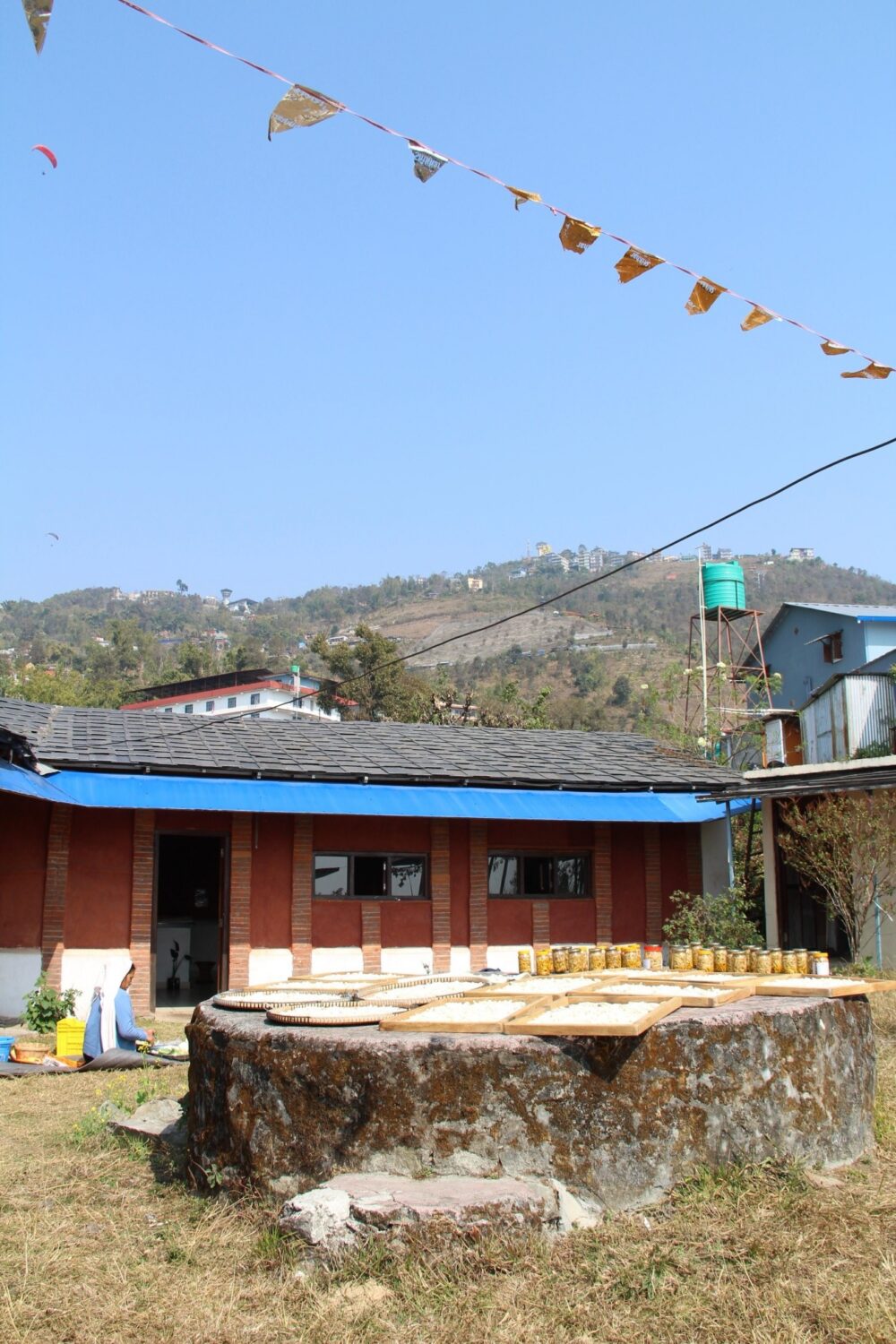
Drying currently happens through traditional sun drying methods where the crops are placed directly outside in the sun. They also make use of a solar drying machine which stores energy using a solar panel. This accumulated energy is used to power a fan for drying processes at night only, with around 30 kg processed product per batch.
Their use of traditional solar drying poses various challenges. While it is a practical method for drying crops, it is weather dependent and can hence compromise quality consistency. The cooperative expressed strong interest in improved solar food drying technologies to reduce waste, ensure better quality, and enable off-season sales.
Post-harvest loss remains a challenge for the cooperative, primarily due to market access limitations and quality standards. Packaging and competition also constrain their growth. Yet several factors may enable their use of improved solar drying technologies, such as hybrid dryers that combine solar and electric power. Enabling factors include reliable electricity, solar power access, processing equipment, collection center and outlet, access to bank credit, and a strong internal savings culture.
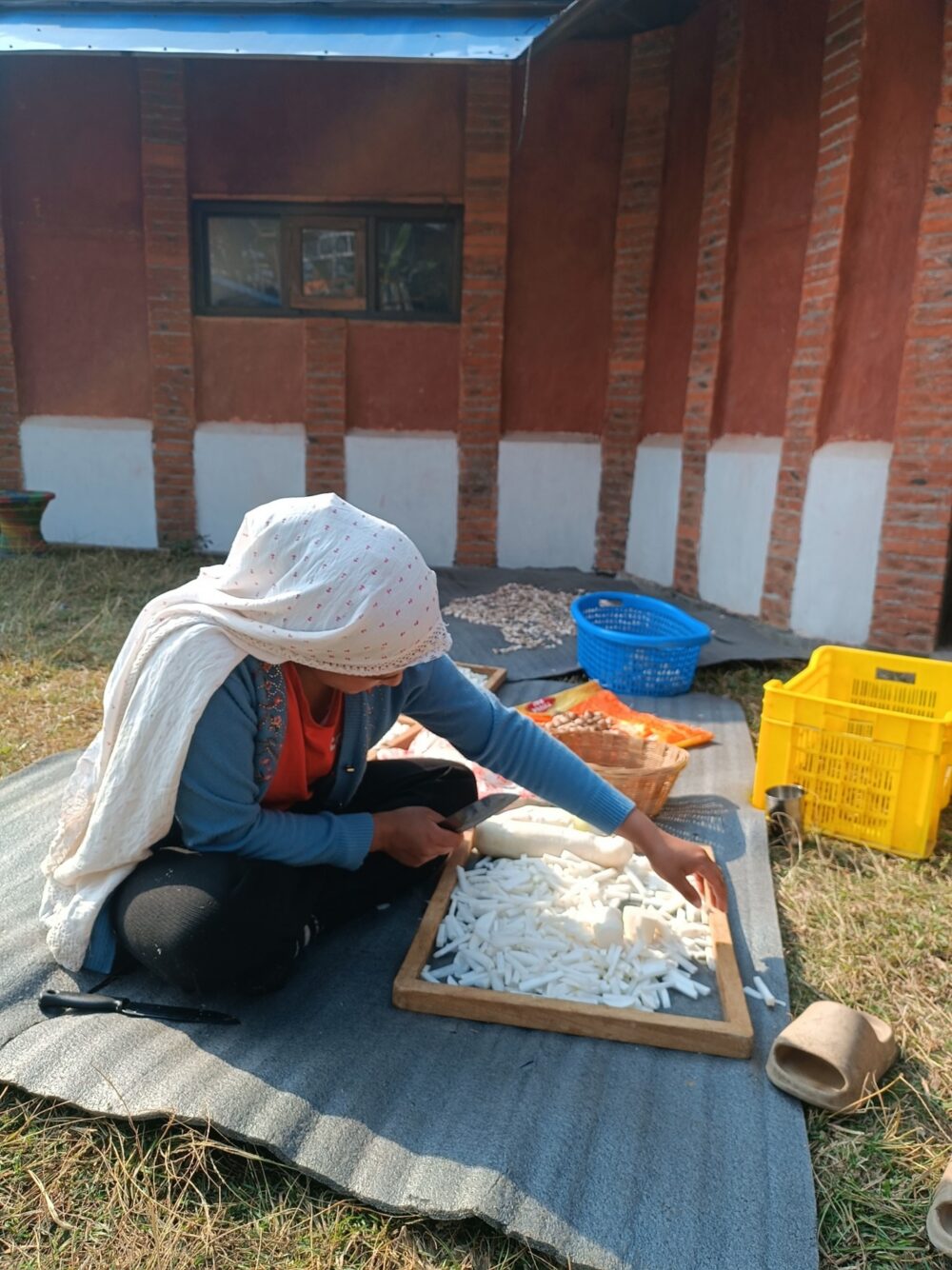
Photo: Arvid Stider.
However, duties that are traditionally associated with women may constrain them from using solar drying technologies through cooperatives such as this one. Women who are not members, but who have a strong desire to participate in the cooperative are restricted by the time consuming and unpaid work that involves caring for their children, family members and household. The cooperative has therefore decided to expand their criteria for upscaling, as members are primarily Brahmin and Chhetri women.
Women members also face significant time burdens. They balance farm work with household care responsibilities, especially during peak agricultural seasons. Despite these constraints, the members largely control the income generated from cooperative sales, which is an important indicator of economic empowerment.
What stands out is the visible confidence of the members. Women negotiate prices collectively, and manage finances transparently. Their value proposition is “available 24 hours” reflects both entrepreneurial ambition and commitment to customers.
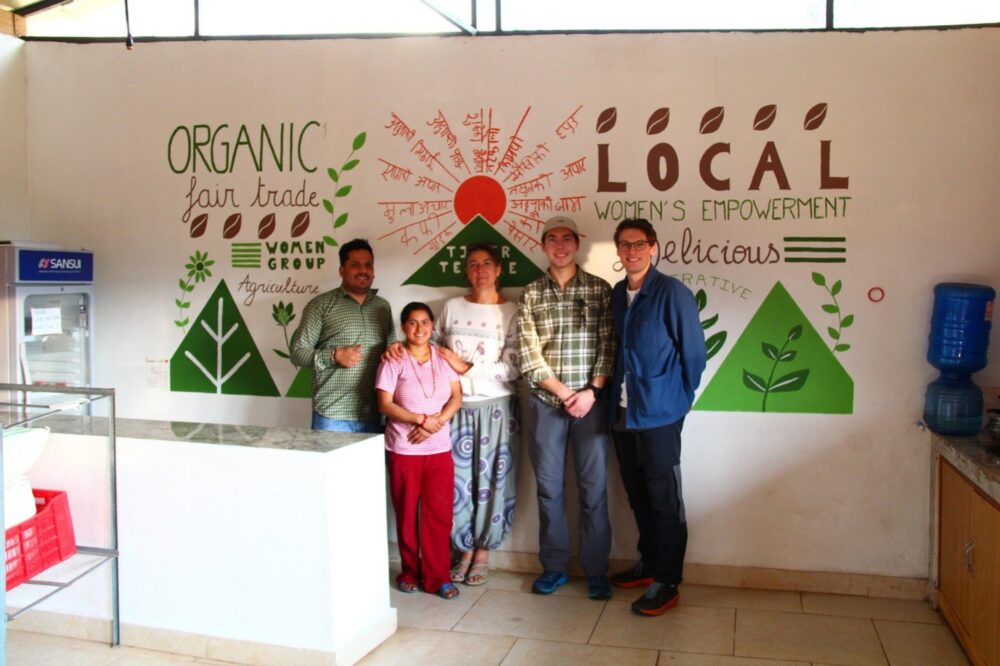
PhD-student Dolendra Paudel together with the manager of the cooperative, the founder of the cooperative, and two MA students from Lund University, Gustav Lautmann and Arvid Stider
This suggests that women’s economic empowerment is lived daily in the Bageshwori Women Agricultural Cooperative. The involved women are producers, processors, entrepreneurs, decision-makers and financial managers.
Solar food drying, in this context, is not merely a technical upgrade. It is a pathway toward reduced post-harvest loss, improved product quality, higher income stability and strengthened collective enterprise for women.
As we celebrate International Women’s Day, the experience of Bageshwori Women Agricultural Cooperative reminds us that sustainable food systems and gender equality and gender roles are deeply interconnected. Technological innovation must address women’s realities, time constraints, and leadership potential for successful implementation.
The Solar Food Project will continue working closely with women-led cooperatives like this one in co-creating solutions that combine renewable energy, local food systems, and inclusive finance.
| SolarFood |
|
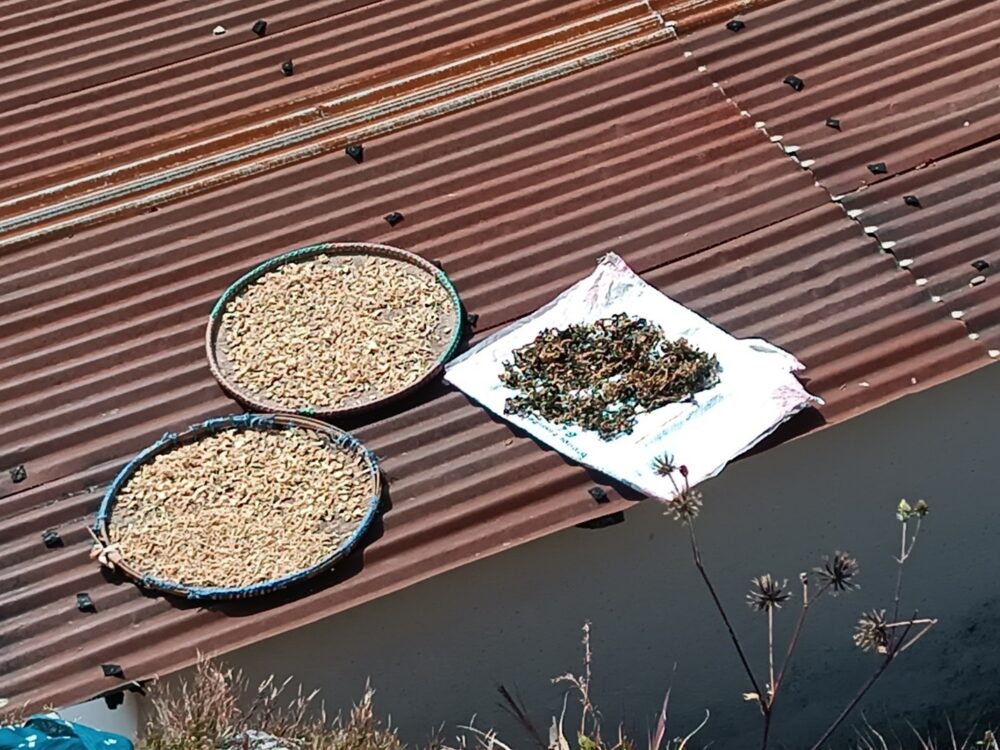 Photo: Dolendra Paudel |
| Gundruk |
| Gundruk is a popular Nepali dish made from fermented, sun-dried leafy greens, such as mustard, radish, or cauliflower leaves. Known for its tangy, earthy, and umami-rich flavor, this “flavor of the mountains” is a staple in Nepali cuisine often served as a soup (gundruk ko jhol) or a spicy pickle (achar). It is a nutritious, high-fiber food that provides essential vitamins during the off-season. |