
One Project, Many Threads: Bridging Research and Practices

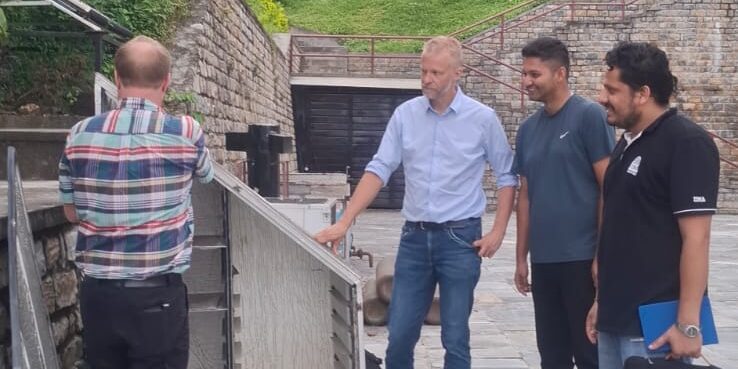
In August 2026, researchers in the SolarFood team met at Kathmandu University, Dhulikhel, to strengthen the connections across different areas of disciplinary expertise. The goal is to translate research into practical solutions for smallholder farmers.
By Dolendra Paudel and Prabhas Baral, PhD students at Kathmandu University
The meeting brought together engineers from Lund University, Dr. Henrik Davidsson and Dr. Martin Andersson along with PhD students from Kathmandu University, Prabhas Baral (KU School of Engineering) and Dolendra Paudel (KU School of Management).
A key concern was the interdisciplinary collaboration between the organization of a participatory workshop for examining gender and labour implications of solar drying, and the development of practical instruction videos for farmers.
The team discussed how these videos can provide clear, engaging, and technically accurate guidance on operating and maintaining improved solar dryers. This includes start-up, routine maintenance, cleanliness, fan replacement, collector cleaning, and care of key components. Dr. Davidsson and Dr. Andersson highlighted the importance of focus, timing, spatial framing, and situational context in producing effective instructional content. The team agreed to involve volunteers with relevant communication and video-production skills.
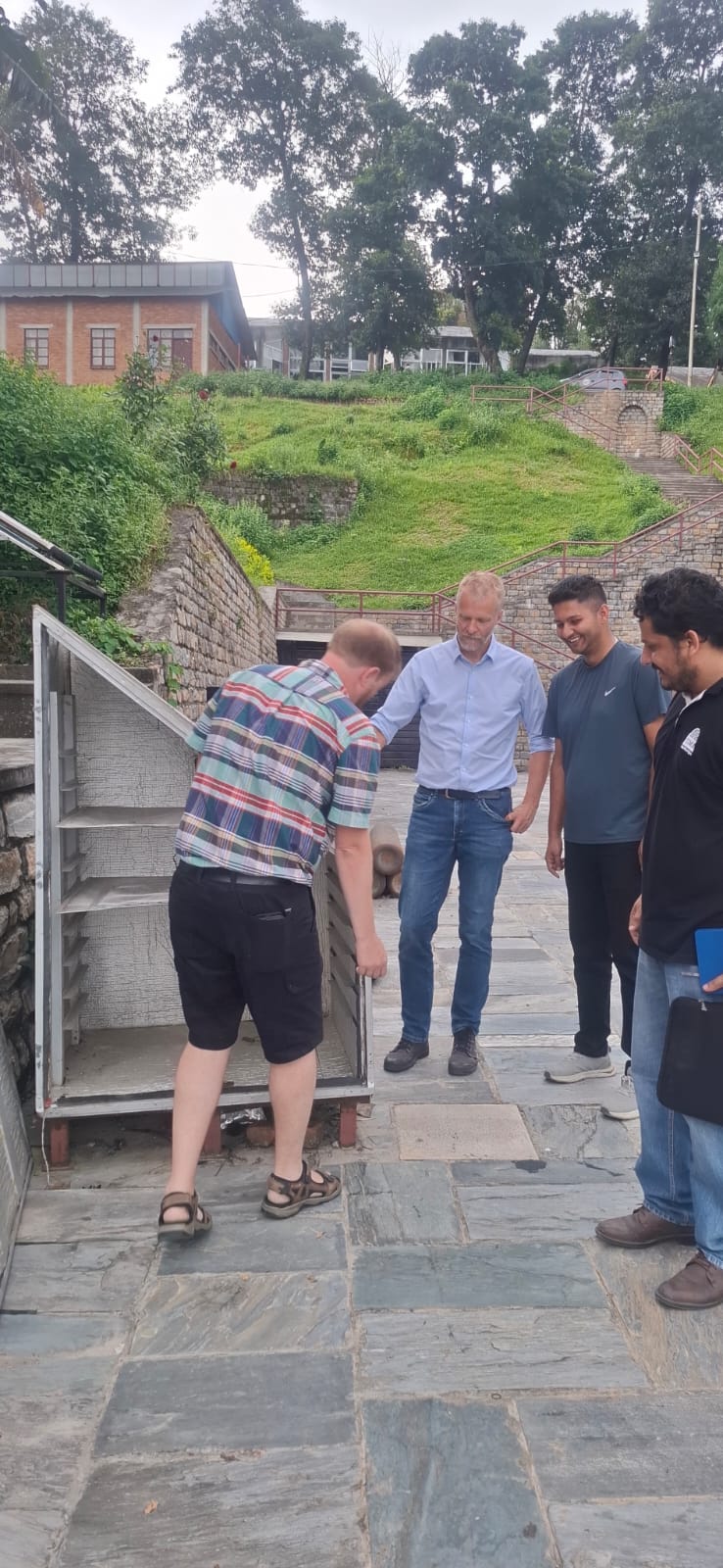
Dr. Henrik Davidsson, Dr. Martin Andersson, and the project team are inspecting a dryer unit at Kathmandu University, Dhulikhel. Photo: Sodiya Suwal.
Together, the interviews and training materials can provide a more complete understanding of engagement with solar dryers; how the technology works, who uses it, who performs the associated tasks, and how training can be designed to reach different household members effectively.
The team also explored the next steps for performance testing of the solar dryers through the National Agricultural Research Council (NARC). They emphasized the importance of finalising a clear and repeatable testing protocol covering nutritional value retention, temperature, moisture, evaluation conditions, and other relevant engineering parameters before formal assessment begins. Securing NARC approval was identified as an important step toward generating credible and robust evidence on dryer performance.
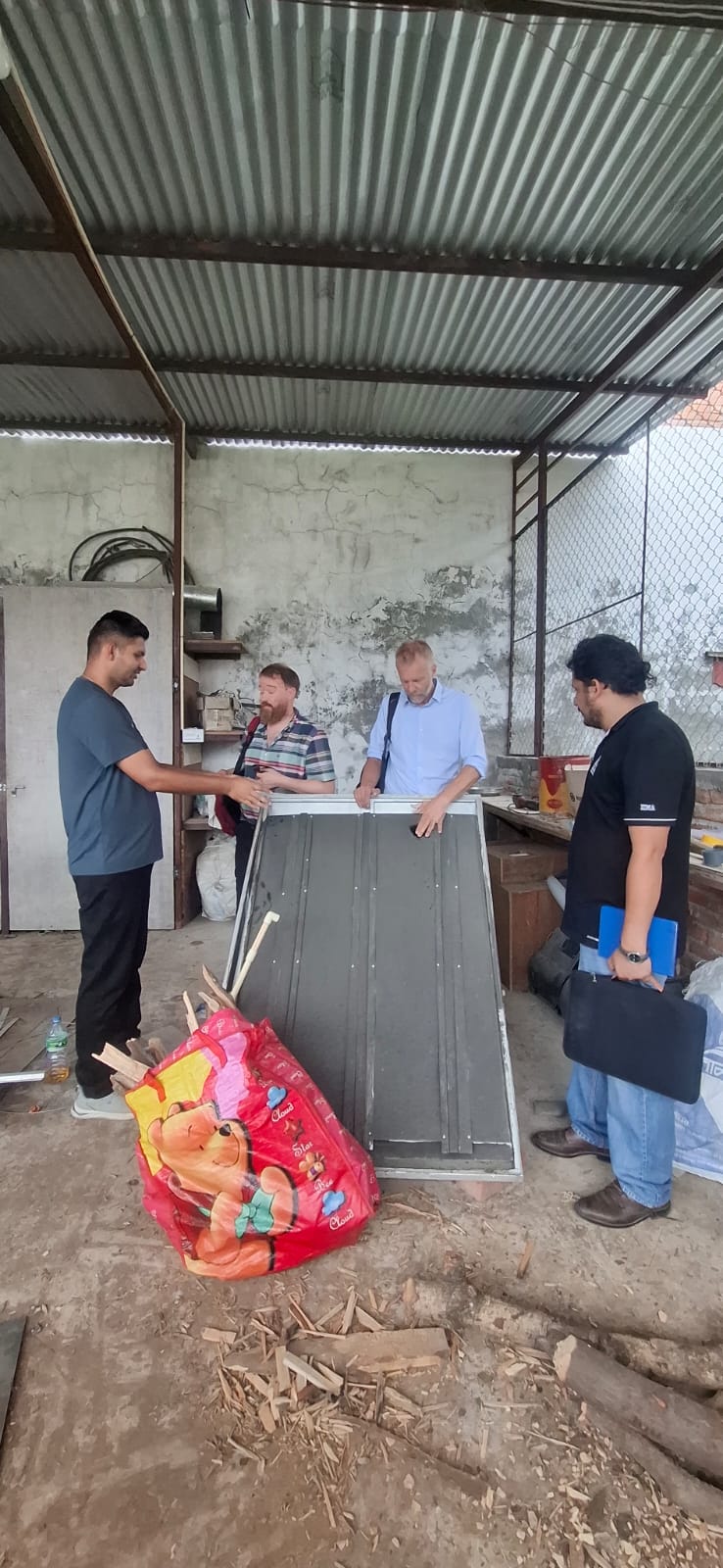
The team reviewed an improved solar dryer under fabrication at the workshop. Photo: Sodiya Suwal.
Following the meeting, the team visited Kathmandu University to inspect an improved solar dryer currently under construction. Discussions focused on refining the design to better meet smallholder farmers’ needs, while ensuring that the unit can be fabricated efficiently within realistic time and resource constraints.
Looking ahead, the project will continue interview studies alongside instruction-video development. We will recruit and brief volunteers for farmer training materials, finalise the performance-testing protocol and pursue NARC approval. In addition, the dryer design will be further refined for practical smallholder-scale fabrication.
By bringing technical, nutritional, and social perspectives together, the SolarFood project weaves many threads into one shared effort: One that bridges research and practice. In doing so, we aim to develop improved solar food-drying solutions that are technically sound, socially inclusive, and adapted to the realities of smallholder farmers.