
Realisation of animal welfare goals in Norway’s food sector (ANIWEL)

The primary objective of ANIWEL is to provide knowledge on how public instruments can be formulated and used in such a way that they effectively pursue the aims of the Animal Welfare Act. Secondary objectives are to provide knowledge about: 1) how food producers respond to public instruments, and how public authorities can apply…
Read More– Test
Robotic Milking AMS – New approaches for management and breeding of dairy cows, in automatic milking systems (AMS)

We aim to expand on a long tradition of herd recording (NDHRS) for breeding and research purposes in Norway by combining information from NDHRS with data from AMS and sensors to improve genetic evaluations of Norwegian Red, enhance herd management, develop better feeding strategies and systems for surveillance of energy balance (EB), health and reproduction.…
Read MoreImproving farmers’ competence by more efficient interaction between farmer, advisory services and research (COMPETENT FARMER)

The future of the Norwegian agriculture sector depends on an effective knowledge and innovation system. This project aims to strengthen how farmers develop their competence in such a system, and will provide both scientific and practical knowledge on how to do this. An important knowledge platform on the Norwegian agriculture innovation system will be developed.…
Read MoreEndringsstudier i Snøhettaområdet 2014-2017: Villrein, ferdsel og forvaltning – Endringsstudier i Snøhettaområdet 2014-2017: Villrein, ferdsel og forvaltning

The project explores the relationships between the requirements on the wild reindeer, tourism and nature management in the mountain area surrounding Snøhetta/Dovrefjell in Norway.
Read More– Frivillighetens plass i distriktskommunenes eldreomsorg
– Etterprøving Blåtind og Mauken skyte- og øvingsfelt

– Mulighetsstudie Ørland og Bjugn kommuner
BIOSMART: Managing the transition to a “smart” bioeconomy
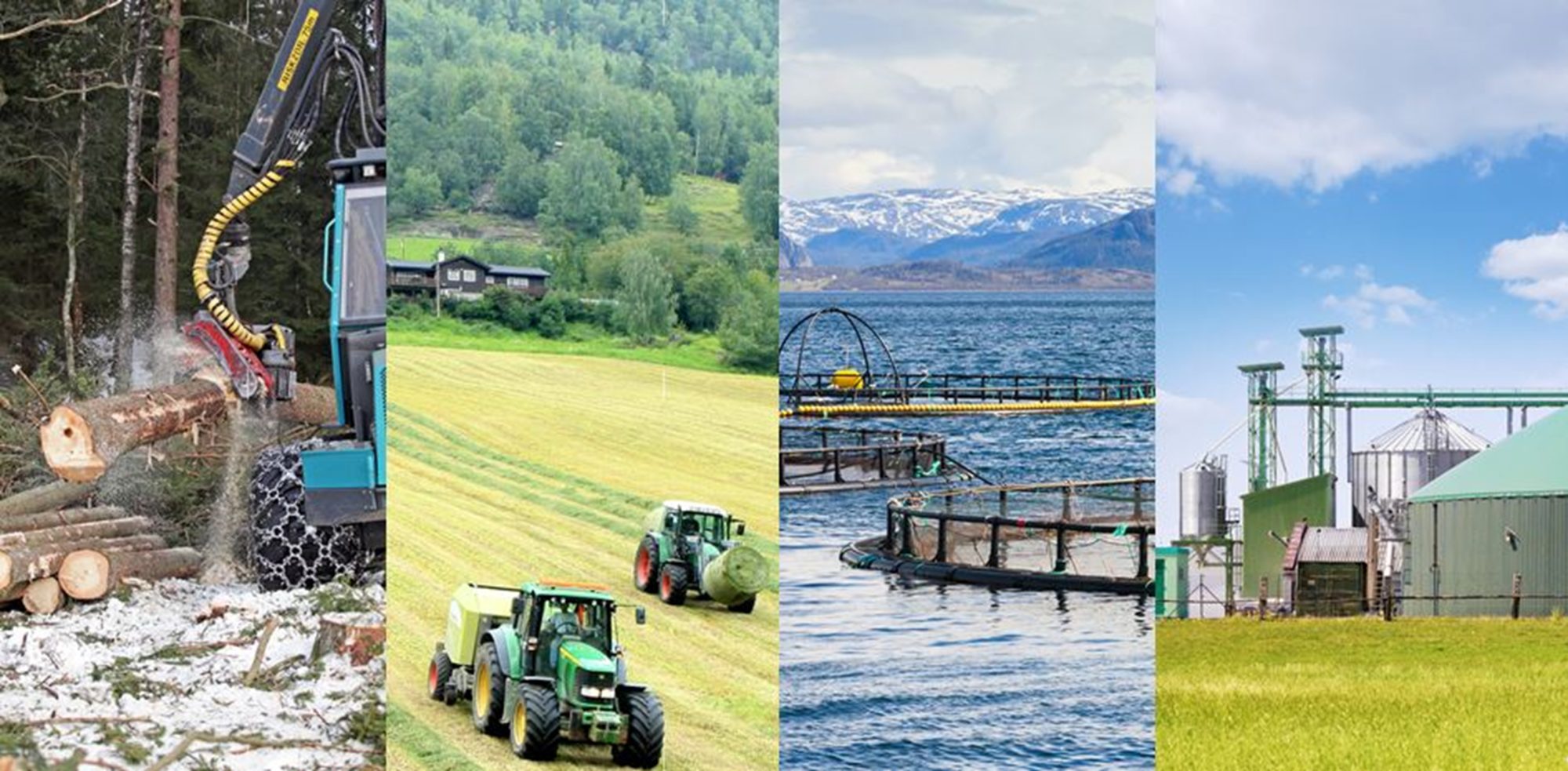
The Research Council of Norway’s (RCN) Work Program 2012-2021 on sustainable innovation in food and bio-based industries presents itself as a “visionary framework” for the development of a “bioeconomy.” As the combination of multiple transitioning socio-technical systems (e.g. forestry, farming, fisheries, biosciences, industry) the move to a bioeconomy does indeed require “visionary” work. In particular,…
Read MoreNEWPATH: New Pathways to a low carbon society: exploring the beef/dairy system as a ‘community of interest’

Transitioning from a high to a low carbon society is critical if Norway is to meet its commitments to tackle climate change. This is by no means a simple task. Often societies become structurally, economically and psychologically ‘locked-in’, so that one part of the system reinforces another, making rapid change difficult. However, by identifying and…
Read MoreFrogs, fuel, finance or food? Cultures, values, ethics, arguments and justifications in the management of agricultural land (FORFOOD)

Agricultural land is a vital yet limited resource. We depend upon it for foodproduction, but it is also in direct competition with other land-based activities, such as housing, infrastructure, mining, investment, carbon off-setting, nature conservation and industry. This competition has direct impacts for national and international food security. The spectre of food insecurity is also…
Read MoreCultural landscapes of tourism and hospitality (CULTOUR) – CULTOUR: Reiseliv og kulturlandskap: kjennetegn, forvaltning og opplevelser
– Utredning av kommunestruktur for øykommuner uten fastlandsforbindelse
Innovation program L21T – Landbruk21Trøndelag
This project aim to prepare for establishment of an innovation program for agriculture in the region of Trøndelag in Norway.
Read MoreCombined solar and membrane drying technologies for sustainable fruit preservation in developing countries

Is it reasonable that even though there is enough food grown to satisfy the needs of the population in numerous developing countries many still go hungry? The Solar Food Project consists of investigating and developing a technological solution that could significantly improve food processing in developing countries in a sustainable way. The solution consists of…
Read MoreFarm-based day care services for people with dementia: quality development through interdisciplinary collaboration

The interest in day care services on farms for people with dementia (PWD) is increasing, and care farming can be viewed as a sustainable use of farm resources. The project aims to contribute to quality development of the services and elucidate factors that are of key importance for collaboration between the farmers as the private…
Read More– Fôrproduksjon og landbrukspolitikk
BIOTOUR: From place-based natural resources to value-added experiences: Tourism in the new bio-economy

Nature-based tourism (NBT) is an increasingly important sector of the Norwegian bio-economy, and the potential for further growth is high. The BIOTOUR project will analyse key conditions for further development of this sector, thereby strengthening its contribution to business innovation, community development and sustainable use of natural resources. Tourism in the outdoors is undergoing significant…
Read More