
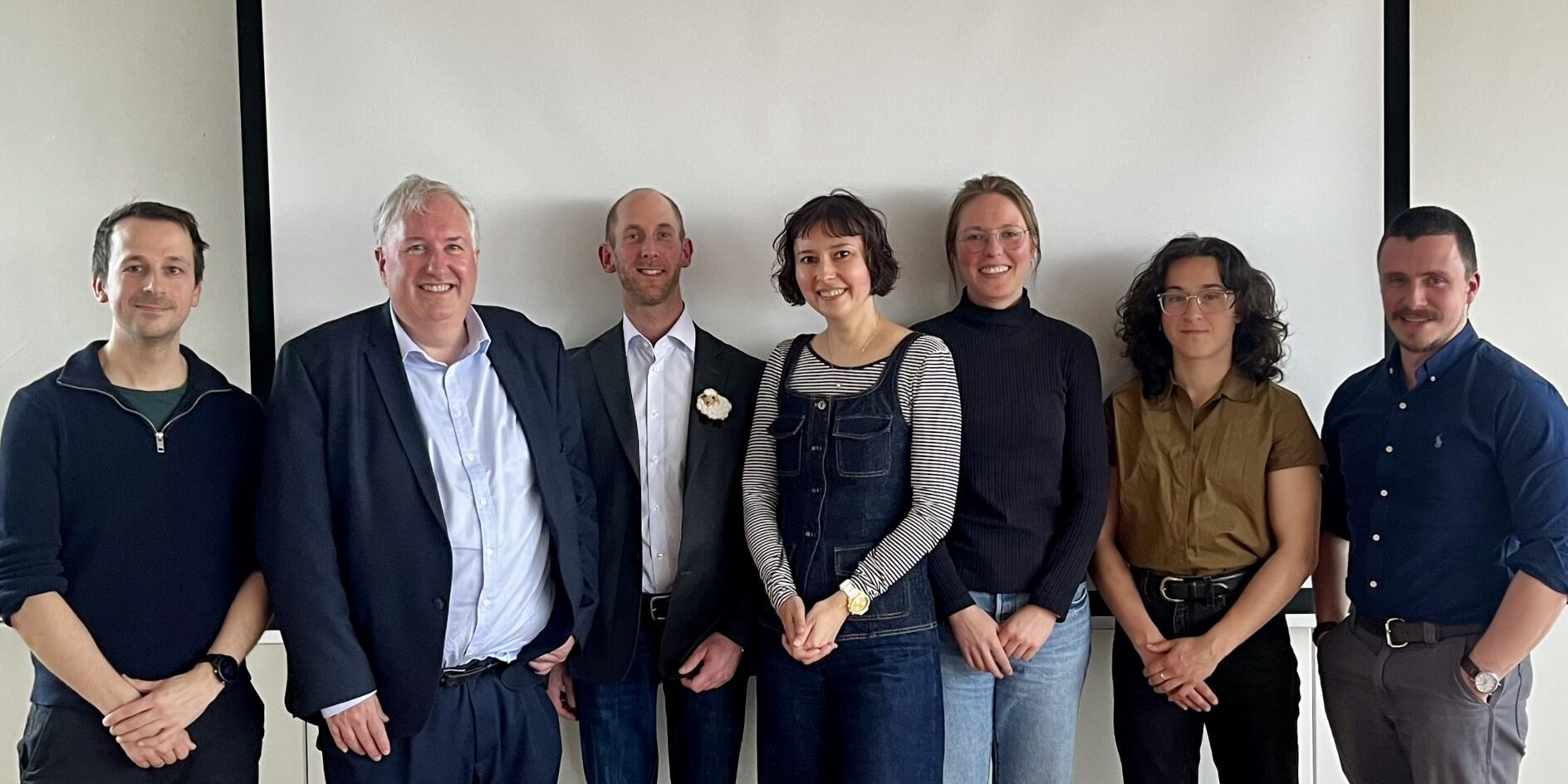
Ruralis “Rural Reawakening” Team Visits Aberystwyth University
Author

Published: 13 May 2026
Last updated: 13 May 2026
Contact persons


Project
Share article:
In the last week of April 2026, the Ruralis Rural Reawakening research team — Natalia Mamonova, Eirik Magnus Fuglestad, and Alexander Zahl-Thanem — visited Professor Michael Woods and his research group at Aberystwyth University, UK.
The Rural Reawakening project was led by Natalia Mamonova from 2023 to 2026 and has been extended through a survey-based study led by Alexander Zahl‑Thanem from 2025 onwards. The project examines the causes of rural discontent in Norway, the forms of protest emerging in rural areas, and the political potential for movements comparable to right-wing populism seen elsewhere in Europe.
Professor Michael Woods is internationally recognised for his research on the politics of the rural, rural discontent, globalisation, and community governance. He leads several major international projects on rural development and spatial justice, including Rural Discontent, Spatial Justice and Disruptive Politics in the Twenty-First Century (RuralSpatialJustice) (2024–2028).
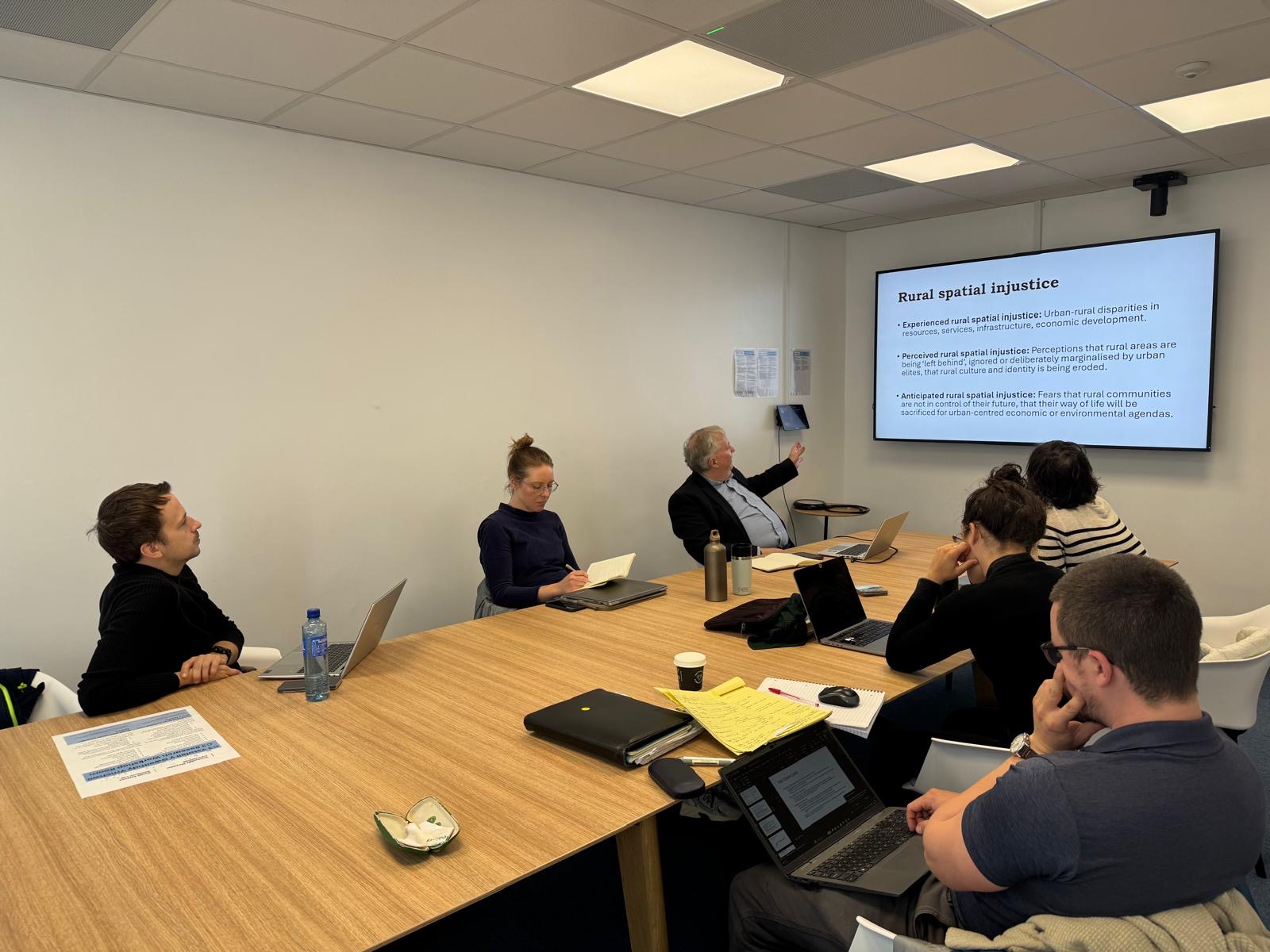
The RuralSpatialJustice project investigates how rural discontent and perceptions of spatial injustice shape disruptive political dynamics, the consequences for social relations within rural communities, and new ways of understanding electoral geographies. The project includes case studies from the UK, the USA, Germany, France, and Romania.
Over two days, the Ruralis team engaged in in-depth and productive discussions with Michael Woods and members of the RuralSpatialJustice team — Franziska Lengerer, Carmen Rafanell, and Conor Judge.

The discussions highlighted strong parallels between rural dissatisfaction in Norway and protest movements across Europe. In Norway, this includes demonstrations against toll roads, campaigns opposing wind power developments, protests against centralisation and the closure of local hospitals, police stations, and regional colleges, as well as several farmers’ protests.
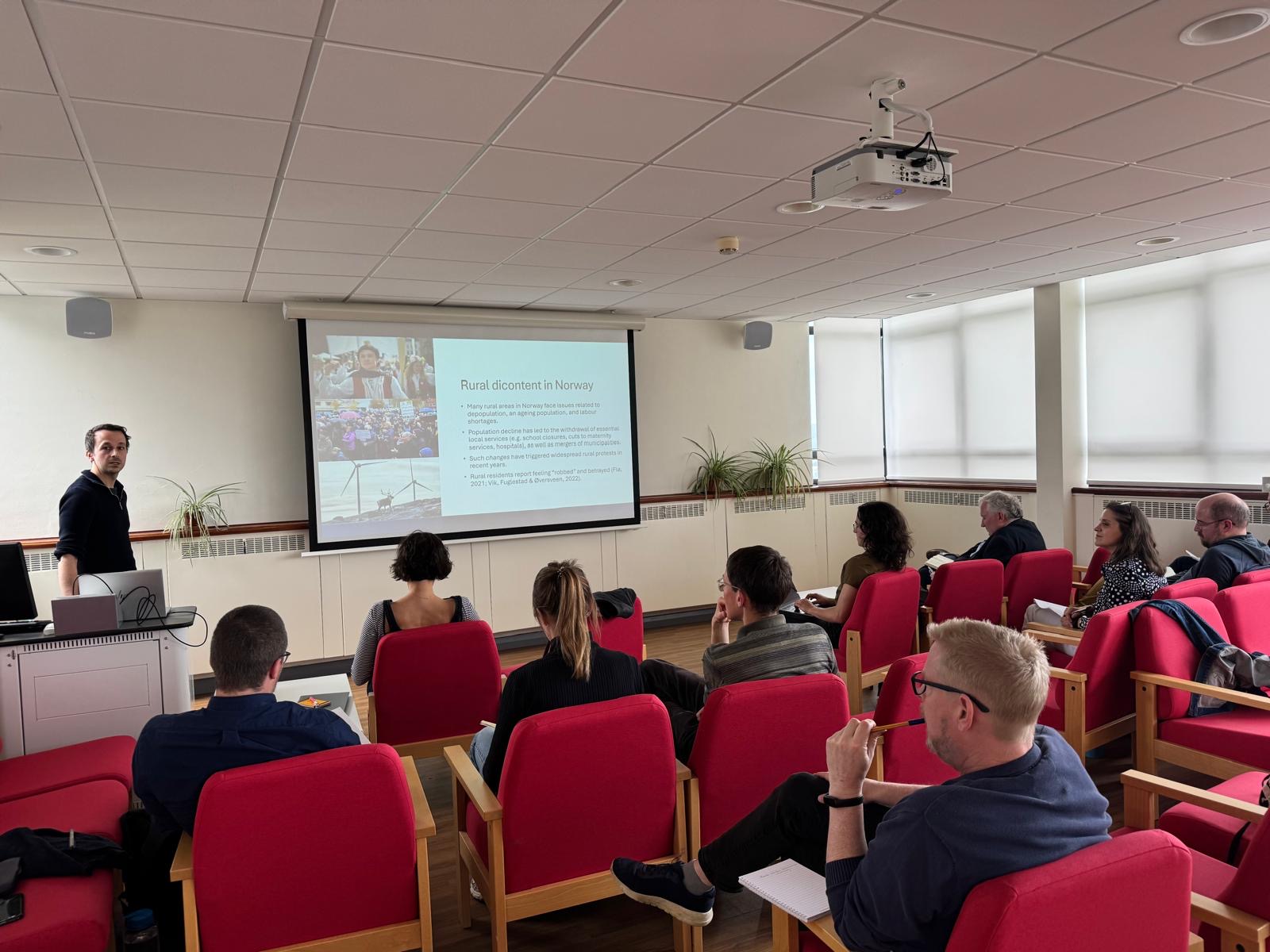
Norway has not seen the emergence of a clearly defined right-wing populist movement in rural areas, therefore, Woods’ concept of “disruptive politics” offers a useful analytical framework. Disruptive politics refers to political movements, events, and tactics that challenge established authorities and political cultures, often through extra-electoral actions such as protests, strikes, and social movements. In rural contexts, these dynamics frequently arise from experiences of rural discontent and can span both left- and right-wing political spectra.
The Ruralis Rural Reawakening team and the RuralSpatialJustice project are now exploring opportunities for future collaboration, with the shared aim of strengthening comparative research on rural discontent and political mobilisation in Europe.
Author
Published: 13 May 2026
Last updated: 13 May 2026