
Envisioning Pathways to Inclusive and Sustainable Food Systems for Vulnerable Populations (Workshop and webinar)
Contact Persons

Research Areas
Share Article:
On behalf of the research project “Creating Inclusive and Sustainable Food Systems in Sub-Saharan Africa (SSA) ECOFOOD”, we are pleased to invite you to the workshop and webinar “Envisioning Pathways to Inclusive and Sustainable Food Systems for Vulnerable Populations”, to be held on 30 September 2026 in Trondheim, Norway.
Background for the workshop
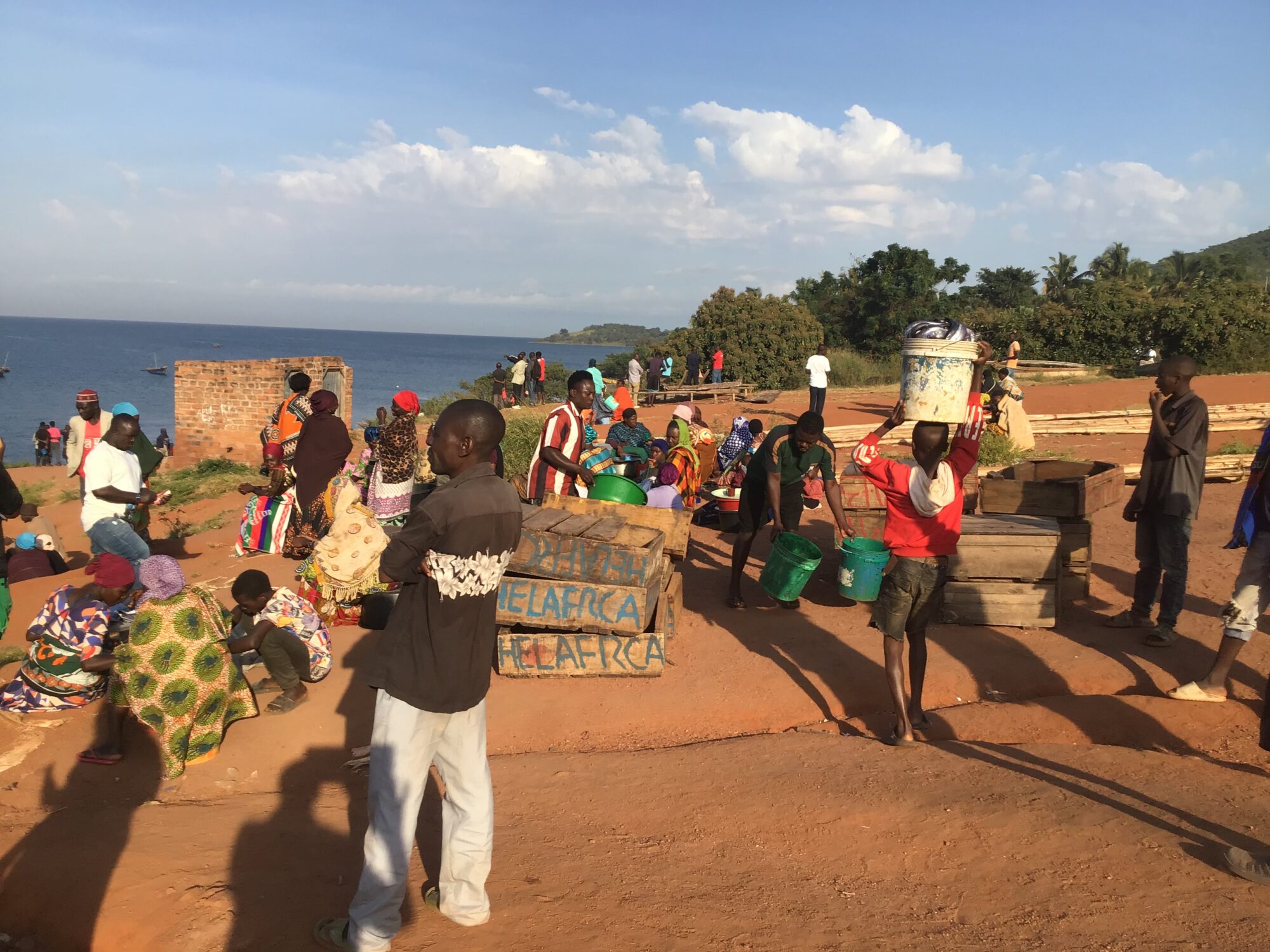
Across the world, food systems are under severe strain. Climate change, conflict and economic instability are making it increasingly difficult for people to access sufficient, safe and nutritious food. Refugees and displaced people in resource-constrained settings are among the most affected. In refugee and displacement settings, households must produce or purchase food, yet they are often excluded from local food systems and have limited access to land and agricultural resources. Humanitarian assistance remains an essential buffer against hunger; however, donor funding is drastically declining.
Evidence from the ECOFOOD Project shows that precarious livelihoods and limited access to food can lead to harmful coping strategies and long-term social and economic consequences. Women, youth and children are particularly disadvantaged, with restricted rights and decision-making power. At the same time, small-scale farming and local collaborative initiatives between refugee and host communities demonstrate promising pathways to more sustainable, inclusive and resilient food systems.
About the workshop
The workshop will bring together researchers, policymakers, donors, humanitarian and development practitioners and civil society actors to explore how to improve food security and transform food systems for vulnerable populations. The workshop objectives include:
- Disseminate findings and evidence from the ECOFOOD Project and related Ruralis research.
- Receive feedback on the key research findings
- Analyse key challenges and opportunities shaping food systems in humanitarian and refugee-hosting contexts, with a key focus on vulnerability, sustainability and resilience.
- Facilitate knowledge exchange and dialogue among stakeholders from policy, research and practice to promote interdisciplinary and cross-sectoral learning.
- Showcase best practices and lessons learned across diverse geographical and institutional contexts relevant to improving food security for vulnerable populations.
- Co-create actionable, evidence-based policy recommendations to inform and enhance food security and livelihoods programming in humanitarian and refugee-hosting contexts.
Practical details
| Date | 30 September 2026 |
| Time | 8:30–16:15 CEST |
| Venue | Quality Hotel Prinsen, Trondheim / Digital |
| Format | In-person participation and digital participation |
| Organized and hosted by | Ruralis – Institute for Rural and Regional Research |
Registration
To support planning and logistics, interested participants are requested to confirm their on-line participation and complete their registration by 18 September2026.
In-person participation is now closed. For any further inquiries please contact the Event coordinator, Rita Moseng Siverstvik, by email at rita.sivertsvik@ruralis.no
If you have any questions regarding online participation, please contact the IT support leader by email at odd.roger.langorgen@ruralis.no
You are welcome to join this conversation, share your experience and expertise, and help shape future policies, programmes, and research that can strengthen food security, livelihoods, and dignity for refugees and the communities that host them.
Webinar link:
https://teams.microsoft.com/meet/351949675433581?p=Aor4u6qg4j3z31EySI
Contact
Should you require any additional information or clarification about the workshop, please do not hesitate to contact the Project Leader, Dr. Sarah Khasalamwa-Mwandha at Ruralis, by telephone: +47 968 12 768 or +47 411 92 69, or by email at skm@ruralis.no.
Further details on registration and the workshop programme will be shared in due course.
Research Partners
Program
08:30
Registration and virtual log-in
OPENING SESSION
09:00
Welcome and opening remarks
- Welcome remarks by Workshop Moderator – Isabelle Hugøy, Ruralis – Institute of Rural and Regional Research, Norway
- A brief about Ruralis – Svein Frisvoll, Ruralis – Institute of Rural and Regional Research, Norway
- Solar Food Project – Pia Piroschka Otte, Ruralis – Institute of Rural and Regional Research, Norway
- ECOFOOD Project – Sarah Khasalamwa-Mwandha, Ruralis – Institute of Rural and Regional Research, Norway
SESSION 1: SETTING THE EVIDENCE BASE
09:30
POLICY PERSPECTIVES
- Transforming Food Systems in Refugee-Hosting Contexts: challenges and emerging opportunities – Titus Jogo, Office of the Prime Minister, Uganda
10:15
Discussion
10:30
Coffe break
10:45
PRACTITIONER PERSPECTIVES
- Strengthening food security for vulnerable populations in humanitarian and refugee-hosting contexts – Eva Karin Holhjem, Caritas Norway
- Food security as a pathway to better educational outcomes for children in humanitarian and refugee-hosting contexts – Anne May Thompson, Stromme Foundation, Norway
11:30
RESEARCH PERSPECTIVES
- “When food systems become battlefields: population vulnerability and the weaponization of hunger in contemporary wars – the case of Tigray, Ethiopia” – Teklehaymanot Weldmichel, Global Development Institute, The University of Manchester
- Food security in contexts of protracted displacement; Insights from the ECOFOOD project – Sarah Khasalamwa-Mwandha, Ruralis – Institute of Rural and Regional Research, Norway/Western Norway University of Applied Sciences
12:00
Lunch Break
SESSION 2: FOOD SYSTEMS IN HUMANITARIAN AND REFUGEE – HOSTING CONTEXTS
13:00
Insights from ECOFOOD – Challenges, opportunities and emerging trends
- Not passive victims but active agents of change. Understanding food systems of internally displaced persons in Ukraine during the war – Natalia Mamonova, Ruralis – Institute of Rural and Regional Research, Norway
- Policy, practices and access to agricultural land in refugee-hosting contexts in Tanzania – Dismas L. Mwaseba & Akwilina W. Mwanri, Sokoine University of Agriculture, Tanzania
- The Tradeoff between Agriculture, Energy and Environment in Refugee Settings; Evidence from Tanzania, Kenya and Uganda – Gemma Donald Mafwolo, PhD candidate, Sokoine University of Agriculture, Tanzania
- Comparing agricultural practices across refugee-hosting contexts in Tanzania and Uganda; agroecologies, and nutrition and food security outcomes – Solomon Olum, Gulu University, Uganda
- Gendered access and control over agricultural assets and resources: A comparative study of refugees and host communities in Adjumani district, Northern Uganda – Stephen Wamala Kalule, Gulu University, Uganda
- Reflection on findings from existing collaborations (NORPART) – Darley Jose Kjosavik, Norwegian University of Life Sciences (NMBU)
14:30
Insights from Solar Food
- Developing solar dryers for smallholder farmer in Himalayas – An engineering perspective – An engineering perspective – Martin Andersson, Lund University
- Barriers and drivers for wider Adoption of solar dryers in Bhutan and Nepal – Noah Andreasson, Lund University
- Inclusive business models for improved solar dryers – Dolendra Paudel, Kathmandu University
SESSION 3: BRIDGING POLICY, RESEARCH AND PRACTICE
15:15
Panel Discussion: Future outlook Research-Practice – Policy Dialogue
16:00
Closing remarks