Utmarka mellom primærproduksjon, ressurs for utvikling og miljøgode

Foto: Bygdeforskning

Prosjektet skal avdekke viktige utviklingstrekk og behov når det gjelder bruk, utnyttelse og forvaltning av utmarksressurser tilknyttet henholdsvis primærnæringene, regional utvikling og miljøfeltet, og analysere sammenhenger mellom utviklingstrekk og behov på tvers av sektorer i spennet mellom det lokalt og globalt nivå. Dette vil også sees i sammenheng med og som en del av overgangsprosesser knyttet til en framvoksende bioøkonomi.

Nyheter

Validering av utviklede forretningsmodellkonsepter

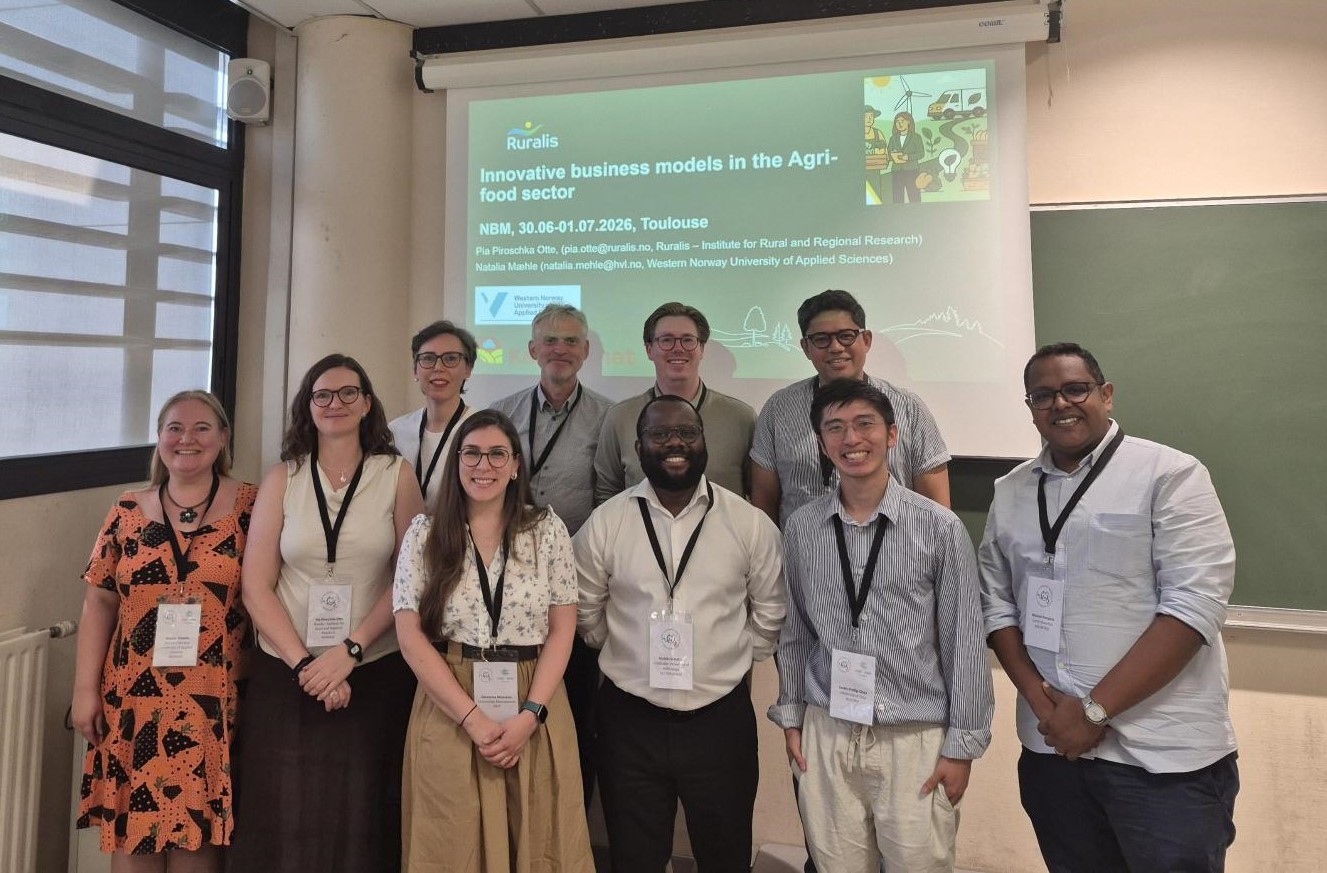
NBM er en årlig internasjonal konferanse som samler forskere på forretningsmodeller fra hele verden. Professor Natalia Mæhle og…

Les mer
Gruppebilde

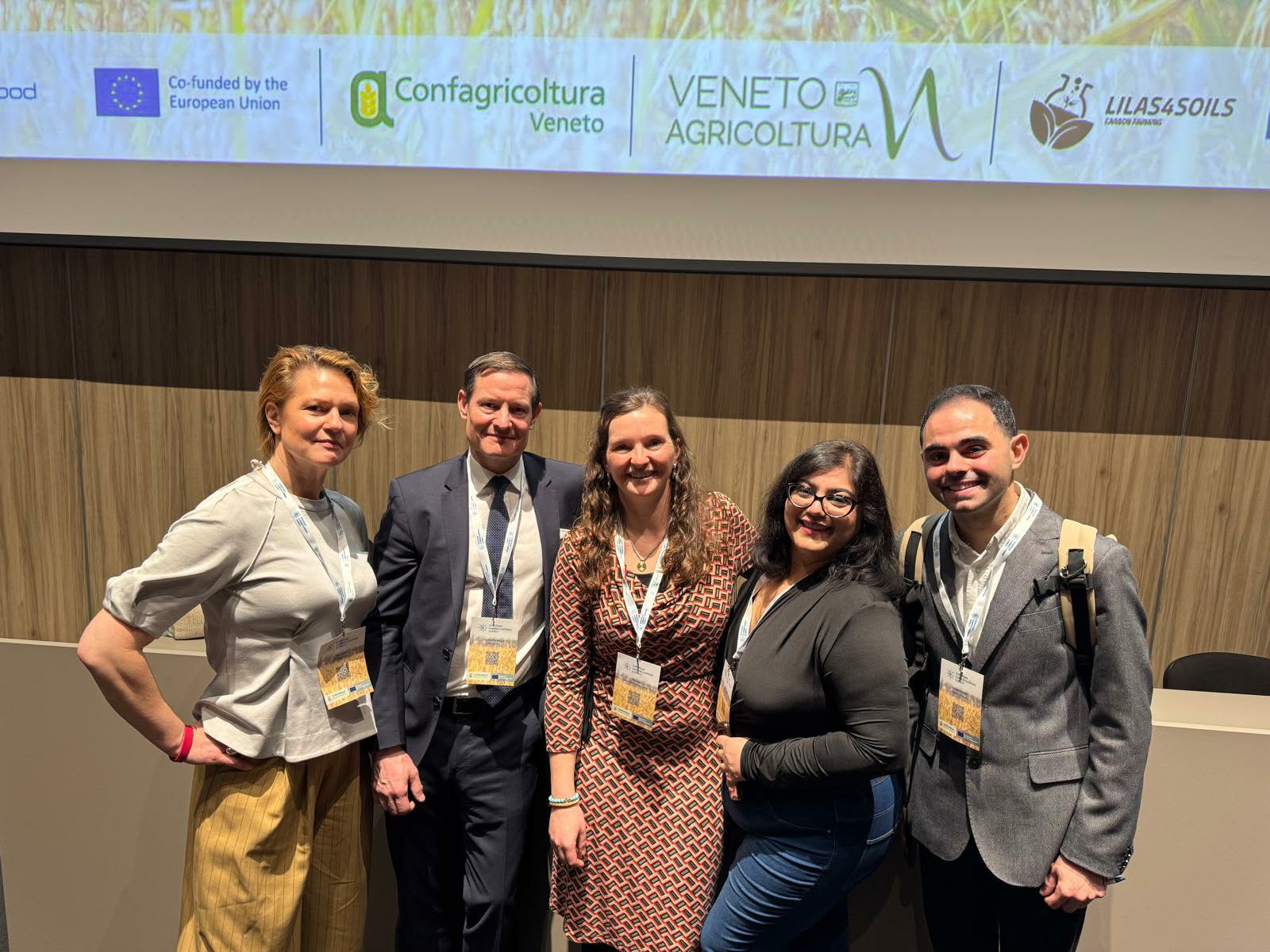
Gikk du glipp av vårt bidrag på European Carbon Farming Summit 2026?


Les mer
Illustrasjonsbilde

Hvordan kan nye forretningsmodeller styrke agri‑matsystemet? Og hva kan vi lære av internasjonale erfaringer?

Bli med på vår workshop om innovative forretningsmodeller i mat- og landbrukssektoren under New Business Model Conference i…

Les mer

Vi feirer den internasjonale jorddagen!

Målet er å undersøke bønders forhold til jordhelse, inkludert holdninger, kunnskap og motivasjoner for å innføre jordforbedrende tiltak…

Les mer
Kunstgjødsel. Isabelle Hugøy

Er gjødselavgift en gyllen mulighet?

Dette er et debattinnlegg, skrevet av forsker Isabell Hugøy. Innlegget gir uttrykk for skribentens holdninger. Forslaget om klimaavgift…

Les mer
Pia og Natalia

Karbonmat – Fra idé til virkelighet (Episode 1 av Karbonmat-podcasten)

De deler erfaringer fra det første året og forklarer hvorfor fokus på jordhelse er avgjørende for at landbruket…

Les mer

Publikasjoner

  • Artikkel

2026

A-11/26 Data on the stated willingness to accept collective agri-environmental schemes for biodiversity conservation of European grassland farmers

Bidragsytere: Viviane Fahrni Robert Finger Katrin Karner Martin Schönhart Sandra Uthes Claudia Bethwell Ruth Sophie Hillesund Gesche Kindermann Raja Hussain Stephen Feeney Michael Joseph Gormally Caitríona Carlin Monika Suškevičs Kalev Sepp Maaria Semm Janar Raet Robert Huber

Beskrivelse

Forfattere: Viviane Fahrni, Robert Finger, Katrin Karner, Martin Schönhart, Sandra Uthes, Claudia Bethwell, Ruth Sophie Hillesund, Klaus Mittenzwei, Gesche Kindermann, Raja Hussain, Stephen Feeney, Michael Joseph Gormally, Caitríona Carlin, Monika Suškevičs, Kalev Sepp, Maaria Semm, Janar Raet, Robert Huber

We present a data set on the stated willingness to accept collective agri-environmental schemes for biodiversity conservation of farmers managing grassland in six European case studies: Austria (AT), Switzerland (CH), Germany (DE), Estonia (EE), Ireland (IE), and Norway (NO). The survey was conducted between spring 2024 and 2025 and consisted of two parts: 1) a choice experiment; and 2) questions about farmers’ and farm characteristics, attitudes, and preferences. In the choice experiment (Part 1), farmers were presented with 10 consecutive choice tasks. Each task consisted of three alternatives, two hypothetical designs for collective biodiversity conservation schemes at the landscape scale and an opt-out option, representing the status quo. The method helps to clarify farmers’ policy design preferences and willingness to accept (WTA) collective biodiversity conservation schemes. Non-monetary attributes of the choice experiment included 1) group size (i.e., the number of partners a farmer works in a collective scheme with), 2) monitoring (i.e., execution of the biodiversity monitoring process), and 3) discretion (i.e., responsibility for management decisions at the farm to enhance biodiversity conservation: the farmers or an external consultant). The survey questions (Part 2) collected data on farmers’ personal and farm characteristics, production orientation, attitudes towards collaboration, the environment, trust and self-efficacy, their risk, time, and social network preferences, as well as their income satisfaction. To reduce respondents’ load, the survey data was matched with farm census data in instances where such data was available (CH, AT, NO).

Data in Brief, Volume 67, https://doi.org/10.1016/j.dib.2026.112980

  • Artikkel

2026

A-10/26 Towards Enhanced On-Farm Soil Carbon Sequestration: A First Assessment of the Potential Role of the Emerging EU Legal Framework

Bidragsytere: Jonathan Verschuuren Natalia Mæhle

Beskrivelse

Forfattere: Jonathan Verschuuren, Natalia Mæhle, Pia Piroschka Otte

Farmers across Europe have embarked on on-farm soil carbon sequestration projects, with the aim to achieve healthy and resilient soils and simultaneously seek new business opportunities, for example, through selling carbon offsets to major greenhouse gas emitters. A regulatory framework for such carbon farming activities is slowly emerging in the European Union, most prominently with the adoption of Regulation 2024/3012 establishing an EU certification framework for permanent carbon removals, carbon farming, and carbon storage in products. However, other new EU laws may incentivize farmers to increase carbon levels in their soils as well, namely, Regulation 2024/1991 on nature restoration and Directive 2025/2360 on Soil Monitoring and Resilience. In this article we assess the extent to which the three new EU laws facilitate on-farm soil carbon sequestration projects through an analysis of the new rules and interviews with representatives of European on-farm carbon credit initiatives in five European countries.

Climate Law, https://doi.org/10.1163/18786561-bja10102

  • Artikkel

2026

A-4/26 Crowdfunding of climate measures in agriculture: investigation of success factors in a real-life setting

Bidragsytere: Natalia Maehle

Beskrivelse

Forfattere: Pia Piroschka Otte, Natalia Maehle og Rita Moseng Sivertsvik

Purpose Promising climate mitigation practices are costly for farmers within the current regulatory, market and business frameworks. There is a need for innovative solutions that ensure that farmers are paid and supported for their efforts to reduce GHG emissions. Crowdfunding represents a novel approach with high potential. This article tests previously identified success factors for crowdfunding in a study of two sustainable crowdfunding campaigns in Norwegian agriculture in a real-life setting. Design/methodology/approach We designed real-life crowdfunding campaigns with two Norwegian farmers and carried out semi-structured interviews with them and their backers to discuss their experiences with crowdfunding. We also analysed both campaign descriptions. Findings One of the crowdfunding campaigns was unsuccessful with no backers, while the other one collected 88 per cent of the targeted amount with 82 backers. The farmer of the successful campaign communicated actively with backers and showed a strong emotional appeal in the campaign description. Originality/value This study contributes to testing previously identified success factors for sustainable crowdfunding and crowdfunding of climate measures in agriculture in real-life settings. Furthermore, the study contributes to the under-investigated topic of crowdfunding climate measures in agriculture, which is a potential innovative approach for reducing GHG emissions and increasing uptake of climate mitigation measures.

Baltic Journal of Management, https://doi.org/10.1108/BJM-05-2025-0400

  • Artikkel

2024

A-15/24 Crowdfunding of Climate Mitigation Measures in Agriculture: Developing a Sustainable Business Model Concept

Bidragsytere: Natalia Mæhle
Om resultatet

The purpose of this article is to develop a sustainable business model (SBM) concept for local crowdfunding of climate measures in agriculture. Many climate measures entail significant capital costs preventing farmers from their adoption, and existing finance schemes have experienced limited success. Crowdfunding can be a novel financing tool for farmers to implement climate measures in agriculture.

Journal of Business Models, Vol. 12 No. 2, https://doi.org/10.54337/jbm.v12i2.8843


  • Rapport

2019

R-6/19 Sustainable Development – New Solution or Old Sorrows? Indigenous Voices on the Frontlines towards Environmental Justice in Norway

Bidragsytere:

Kontakt oss

Ønsker du å komme i kontakt med oss?
Fyll ut skjemaet under så vil vi svare deg så fort som mulig.