BIOSMART: Managing the transition to a “smart” bioeconomy
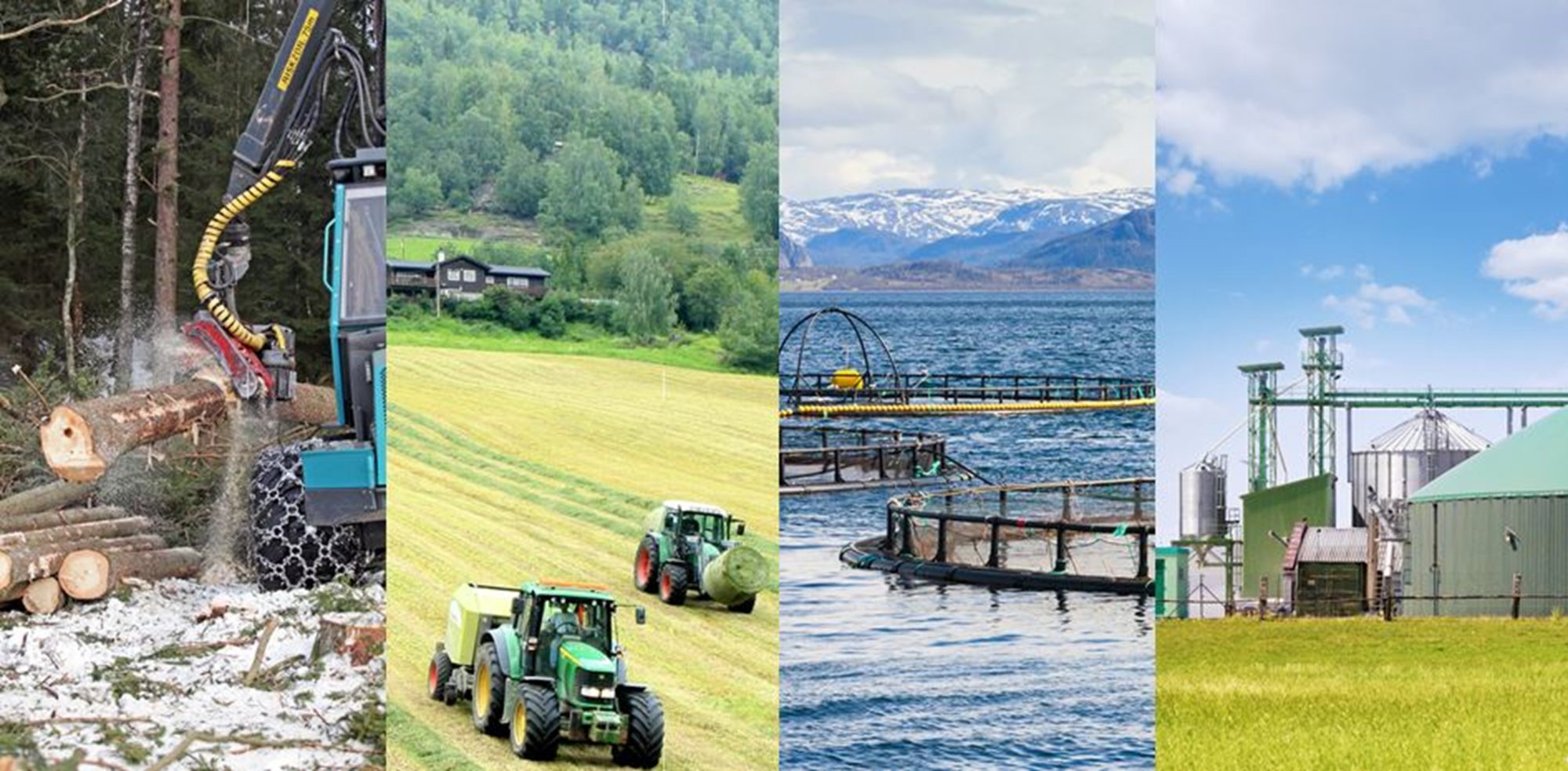
Foto: Colourbox, kollasj

The Research Council of Norway’s (RCN) Work Program 2012-2021 on sustainable innovation in food and bio-based industries presents itself as a “visionary framework” for the development of a “bioeconomy.” As the combination of multiple transitioning socio-technical systems (e.g. forestry, farming, fisheries, biosciences, industry) the move to a bioeconomy does indeed require “visionary” work. In particular, developing a “smart” bioeconomy (integrated, human-capital and technology based, and wisely implemented) requires development across and between the biosectors. In addition, as a societal transition, it needs to be acceptable by citizens and consumers alike, while the reconfiguration of the resource base to biomass and move to a knowledge economy raises issues for intellectual property (IP) and other property rights. BIOSMART promotes a “smart” transition by conducting a major foresighting exercise on stakeholders in the bioeconomy. An initial extensive foresighting process will cover 1500 businesses from the farming, forestry, fisheries, bio-science and industry sectors to develop SEPARATE industry scenarios of bioeconomic development.


A number of key scientific studies will be conducted around the foresighting exercise. These look at bio-tech transitional processes in Norway, issues of IP and land use rights, how the resources envisaged for the bioeconomy might be sourced, optimal location of bioeconomic development, whether the new bioeconomy will be environmentally sustainable and energy efficient, and what level of value creation we might expect. These will provide input into a second round of foresight aimed at developing 4 INTEGRATED scenarios of bioeconomic development across all sectors and stakeholders and suggesting ways of achieving the transitions. While there are numerous scientific, advisory and policy outputs from BIOSMART, the main outcome will be to prepare industry, government and society for the coming transition to a “smart” bioeconomy.

Project details
Project number

BIOSMART

Project period

01/01/2015 - 31/12/2018

Collaboration partners

NIBIO; Norut; SINTEF; NTNU; Universitetet i Oslo; Agripol, Germany; James Hutton Institute, UK; Plymouth University, UK; Technical University of Denmark; University of Otago, New Zealand; McGill University, Canada; NHO Mat og Drikke

Financing

The Research Council of Norway, BIONAER Program

News
Barriers in the Bioeconomy

This is the conclusion from a review of Norway’s policy, regarding the transition to a bioeconomy society. –…
Read more

Those with lowest expectations needs more involvement

  Simultaneously, the identified sector differences hints about actors in need of more involvement. These are among the…
Read more

Technology, society and the bioeconomy

New technology creates several possibilities in the bio economy. Without the society at the same page though, a…

Read more

Publications

  • Article

2026

A-8/26 ‘It Would Have Been Odd to Separate the Animals and Then Look the Cow in the Eyes’. A Qualitative Study of Norwegian Dairy Farmers

Contributors: Juni Rosann Engelien Johanssen

Description

Writers: Logstein Brit, Gunn-Turid Kvam, Juni Rosann Engelien Johanssen, Hugh Cambell

Farmers’ rearing practices in livestock production and their decision to adopt alternative practices are of ongoing interest in rural sociology. For social scientists examining alternative agriculture, enduring questions remain about not only how alternatives can emerge but also how mainstream systems often remain relatively unperturbed by the emergence of alternative practices. This article explores these questions through an examination of cow–calf contact (CCC) in Norway. In the industrial dairy sector in the Global North, the removal of dairy calves shortly after calving has become an emerging concern within veterinarian medicine and ethology. In this study, we explored why dairy farmers decide to change rearing practices to CCC systems where calves have contact with the dam for more than 14 days in dairy production, an alternative practice which misaligns with wider practices in the industrial dairy sector. The paper reports the results of qualitative interviews with Norwegian farmers who use these alternative practices and, using Convention Theory (CT), addresses the on-farm and off-farm dynamics that shape both the emergence as well as the current marginalisation of this new alternative practice of calf and cow rearing in dairy farming. The results of the study reveal multiple dynamics shaping the adoption of CCC. The results reveal the way that farmers have the ability to draw on multiple justifications which enable CCC adoption despite significant structural misalignment with Norway’s industrial dairy sector. The conclusions support the arguments of social scientists engaging with animal welfare about the importance of societal dynamics both outside and within agricultural systems. How these social dynamics connect with on-farm contexts is highly influential in shaping animal rearing practices and associated farmer justifications. The use of CT demonstrates clearly that creating better animal welfare practices, in this case through the adoption of CCC, is not simply a matter of education, policy or technical interventions. It requires wider alignments between worlds of production, often in hybrid forms, or else the solid industrial centre of these kinds of farming world simply endures relatively untroubled and unchallenged.

Sociologia Ruralis, Volume 66, Issue 2, https://doi.org/10.1111/soru.70032

  • Article

2023

A-11/23 Interrelationships between cows, calves, and humans in cow-calf contact systems—An interview study among Norwegian dairy farmers

Contributors: Juni Rosann E. Johanssen Mette Vaarst
  • Article

2020

A-40/20 Bioøkonomivisjoner i Norge, Norden og EU

Contributors: Gerald Schwarz
  • Article

2020

A-27/20 Bioøkonomien i møte med samfunnet – Empiriske funn og etiske refleksjoner

Contributors: May Britt Thorseth

Contact us

Would you like to get in touch with us?
Fill in the form below and we will answer you as soon as possible.